
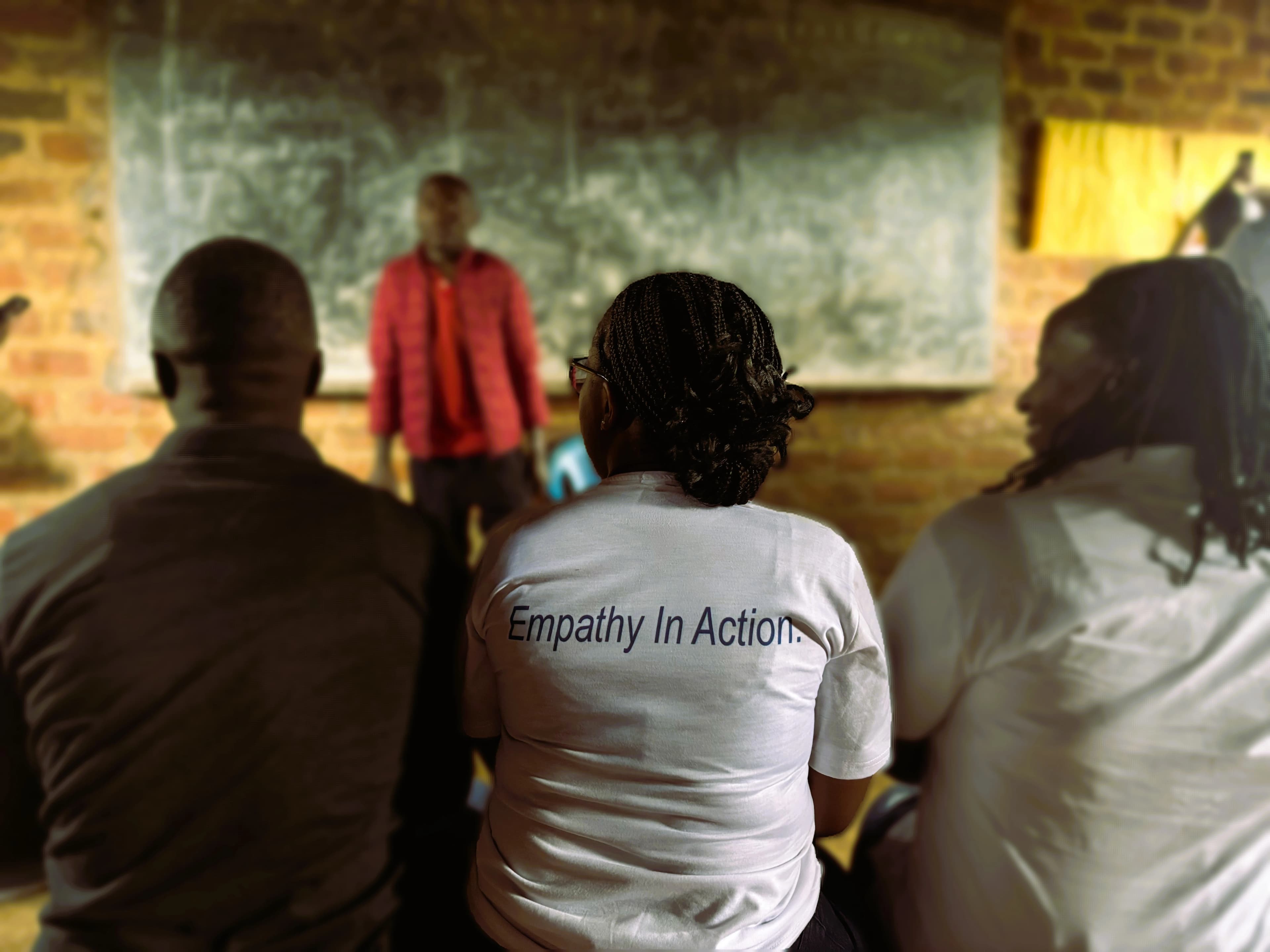
Eric, 26, Ngora district
A world unveiled
I’m Eric, 26, from Ngora district, but Kampala raised me. My childhood was in the city, with schools that, while not perfect, had walls, roofs, and proper desks. I thought I understood "poverty" and "marginalized communities" from reports, from news. But nothing, absolutely nothing, prepared me for Murambo Catholic Nursery and Primary School.
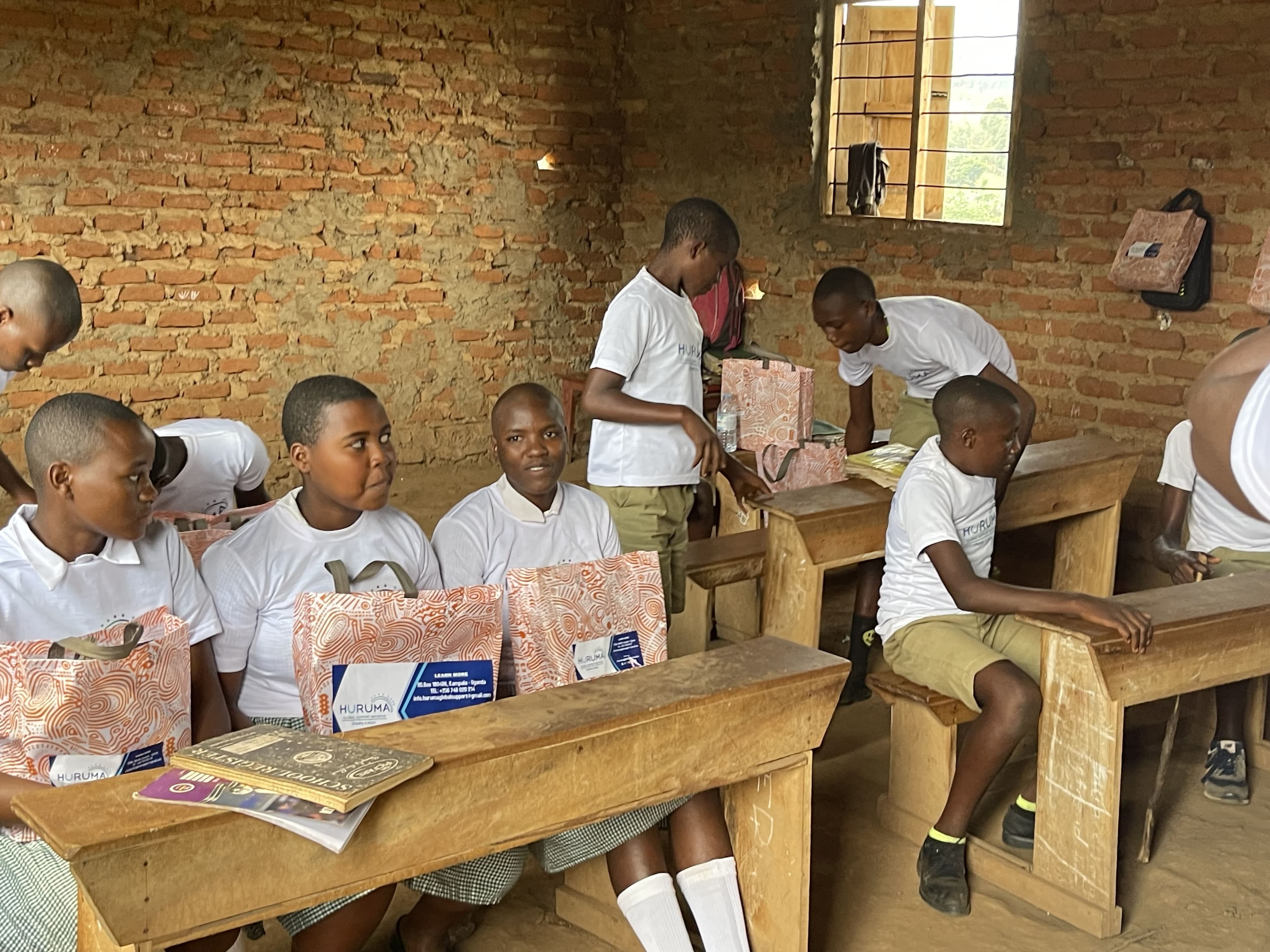
When we arrived, the children's smiles as they received their books, their little faces lighting up with the promise of a future, it was pure, unadulterated joy. I felt a swell of pride, thinking, "Yes, this is why we do what we do."
Then came the tour. And with every step, my heart felt like it was being squeezed tighter and tighter. The P1 classroom… I just stood there, staring. It wasn't just a classroom; it was their whole world – a classroom, a staff room for eleven teachers, the Headmistress's tiny office, and even a food store. A dirt floor. Log benches that looked like they'd splinter your spine. And the Headmistress, with papers spilling from a makeshift shelf, two soccer balls on top, trying to run a school from behind a door. My mind just couldn't reconcile it. “Is this… is this really a school?” I remember whispering to James, my voice barely audible. It felt like a scene from a forgotten era, not something happening today.
Moving to the P3 classroom, seeing the pile of firewood, the soot-stained walls, the few plastic plates on a tarpaulin on the ground – it was a kitchen. Their learning space was a kitchen. The children’s woven basket bags, holding their few precious books, were so small, so humble. My own school bag was always bursting with textbooks, notebooks, a lunchbox. Here, it was a struggle for even the basics.
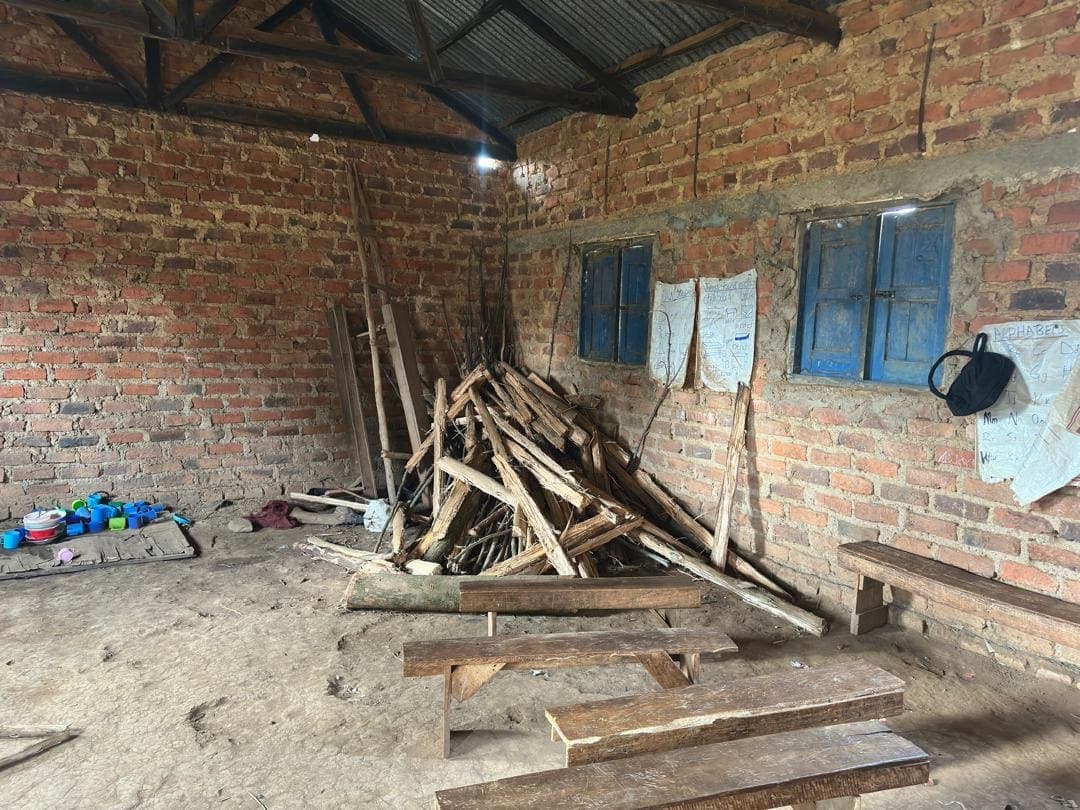
And the P4 classroom… oh, the P4 classroom. No windows, no doors, no ceiling, just a partial roof. Broken blackboards. Five rickety log desks that looked like they belonged in a local bar, not a place where children were meant to learn, to dream. I felt tears welling up, hot and stinging. “How can they even sit here, let alone learn? How can they write an exam on this?” The injustice of it was a physical ache in my chest. I thought of my comfortable university lecture halls, the quiet libraries, the endless resources. These children, just as bright, just as deserving, had none of it.
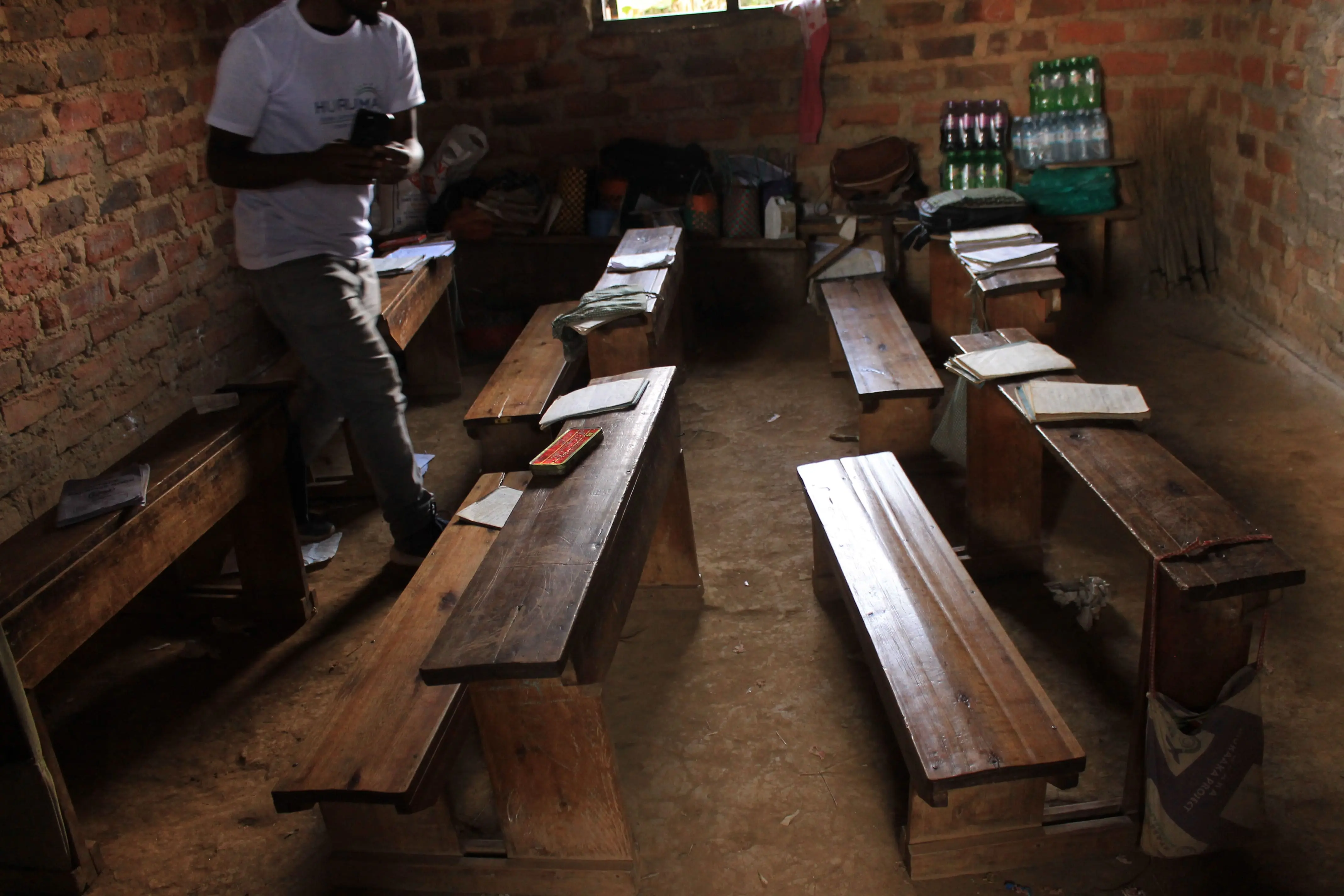
The lack of latrines, the 1km trek for water, the barefoot children with tattered uniforms – it was a relentless assault on my senses, each detail chipping away at my composure. When I saw the misspelled "Magnet" on the blackboard, a simple word, it wasn’t funny; it was heartbreaking. It was a cry for a dictionary, for basic tools, for the dignity of knowing. And the teachers, five months without pay, still showing up, still trying to teach… I just wanted to hug them, to tell them they were heroes. “They come here every day? Without pay? That’s… that’s incredible,” I remember saying, my voice thick with emotion.
Being involved in this campaign, I thought it was about giving. But it was about receiving a brutal, beautiful lesson. It’s a privilege I never truly understood, to have had a proper education, to have had a choice. This activity, this raw encounter, means everything to me now. It's not just a project; it's a moral imperative. It showed me that my comfortable upbringing, my city life, shielded me from a reality that is still very much alive for so many. The value it brought was a shattering of my ignorance, a deepening of my empathy that feels like a wound, but a necessary one.
I learned that problems are rarely simple. You deliver books, but the children are dropping out because they can’t afford fees, because there’s no toilet, because their teachers are starving. It’s a tangled web of interconnected struggles. And the resilience… the sheer, unwavering resilience of those children and teachers. It’s a power I’ve never seen. From this, I will carry a new lens. I will question more, look deeper, and never take for granted the basic dignities that enable learning and growth. My journey from a comfortable Kampala childhood to a university student now feels like a responsibility, a call to be a voice for those children, to fight for the foundations they deserve.
James, 27, Bushenyi
Echoes of a distant past
I’m James, 27, from Bushenyi. When I heard about Murambo, a part of me braced myself. Bushenyi has its pockets of deep poverty, and though I didn't grow up in those exact circumstances, I’ve glimpsed them in my much earlier childhood. I’ve seen the worn uniforms, the children walking miles barefoot. So, when we arrived, and the 15 PLE candidates greeted us with those eager smiles, I felt a familiar pang – a mix of hope for them and a quiet dread for what we might find.
Handing out the paper banks and scholastic materials, I saw their eyes, shining with that desperate hope for a chance. It was beautiful, truly. But as we walked through the school, it wasn't a shock in the same way it was for Eric. For me, it was a painful recognition, a chilling echo. “This is exactly what I remember from some of the village schools when I was a kid,” I found myself saying, my voice low, almost to myself. “It’s like nothing has changed.”
The P1 classroom, serving as everything from a learning space to a staff room and food store, with its dirt floor and crude log benches… it was a scene I’d seen before, in fleeting glimpses. The makeshift Headmistress’s office behind the door, the overflowing papers – it spoke of ingenuity born of desperation. It hurt to see it, knowing that decades later, children are still enduring this.
The P3 classroom, a kitchen with its pile of firewood and inadequate plastic plates, was a familiar sight from my early memories of rural life. The soot marks, the jerricans, the children’s woven basket bags – it was all too real. It’s a constant battle for these communities, where every space must serve multiple purposes just to keep things going.
“This is not how a child should learn.”
And the P4 classroom, with no windows, no doors, a partial roof, and those broken, log-like desks… that’s where the tears came. Not a sudden gush, but a slow, steady stream, a deep ache. I remembered the stories, the struggles. To think these children are still trying to learn, to write their exams, on those surfaces, exposed to the elements. “This is not how a child should learn,” I murmured, shaking my head, a profound sadness washing over me. It felt like a wound from my own past, reopened.
The lack of latrines, the distant borehole, the barefoot children, the threadbare uniforms – these weren't just details; they were the fabric of a life I narrowly escaped. The science teacher's misspelled "Magnet" on the board, the absence of basic dictionaries and atlases – it’s a symptom of a system that has forgotten its most vulnerable. And the teachers, five months without pay, still showing up… “How do they do it? How do they keep coming?” I asked, my voice cracking, knowing the immense sacrifice that entails. It’s a dedication that breaks your heart and fills it with awe all at once.
Being involved in this campaign felt like a homecoming, in a way. It was a chance to give back to the kind of communities that shaped my broader understanding of Uganda, even if I didn't live their exact struggles. The activity itself, delivering those books, was a small act of kindness, but the revelation of the deeper needs was immense. It showed me that the fight is far from over.
This experience means a profound connection to my roots, a recognition of the systemic issues that persist. It means that HGSI’s work is not just charity; it’s justice. The value it brought was a renewed sense of urgency, a confirmation that the "1K Project" and broader infrastructural support aren't just good ideas; they are absolutely essential, a direct response to the very real pain we witnessed. It’s about building the foundations that were missing for me, and are still missing for them.
I learned that while progress is made, the deepest wounds of poverty and inequality heal slowly, if at all, without sustained, comprehensive intervention. The resilience of those children and teachers, enduring unimaginable conditions, is a testament to the human spirit’s capacity to hope, even in despair. From this, I will carry a more grounded understanding of the challenges, a deeper commitment to long-term solutions, and a fierce determination to ensure that no child has to learn on a log, or walk a kilometer for water, or suffer the indignity of no latrine. My journey, from glimpsing these struggles as a child to now, as an adult, is a call to action, a lifelong commitment to being part of the change.